

ABNA24 - Mandana Pourian is an Iranian physician and a graduate of Farzanegan School. She won first place in the Kharazmi Scientific Festival, earned a national silver medal in the Biology Olympiad, and ranked first in the pre-internship examination.
Dr. Mandana Pourian is currently working in the Radiology Department of the Cancer Institute at Imam Khomeini Hospital Complex in Tehran, where she remains hardworking and up to date in her specialty. She has a deep love for Iran, and her dream is to help build a “developed Islamic Iran.”
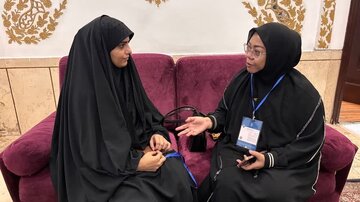
To become more familiar with this Iranian doctor, the Pars Today website conducted an interview with her, excerpts of which are presented below:
Q -- Please introduce yourself.
I am Mandana Pourian, a radiology specialist and fellowship-trained breast imaging physician, a faculty member at Tehran University of Medical Sciences, and currently working in the Radiology Department of the Cancer Institute at Imam Khomeini Hospital Complex. Alongside my professional work, I am also the mother of two children and interested in nature and poetry.
Q -- Doctor, please tell us a little about medicine—especially radiology—and why you chose this field.
Medicine is a highly valuable profession because it deals with people’s health and lives. In my view, any step that helps human beings live without pain and suffering is extremely valuable, and this is what drew me toward medicine. In addition, medicine is a scientific and dynamic field because it is closely connected with people, and the human body itself is a remarkable story.
I chose radiology because it was more compatible with my personality and temperament, and as time passes, I become even more satisfied with my choice.
Q -- You are a faculty member at Iran University of Medical Sciences and serve as an assistant professor in the Radiology Department of the Cancer Institute at Imam Khomeini Hospital. What is the current state of cancer treatment and research in Iran?
In this field, many studies and research projects have been conducted and are still underway in Iran, and we also have effective treatments available. In radiology as well, very significant progress has been made, and we are currently using technologies that are still in the research phase in other parts of the world. In this area, we also use artificial intelligence for reporting and analysis. Overall, despite Western sanctions, we are moving forward alongside the rest of the world.
Q -- Doctor, one of your distinctive characteristics is your full hijab. What is your view on hijab?
In my opinion, clothing and covering are part of human nature, and human beings were created with this characteristic. I believe that modest dress is directly connected to modesty, and modesty is an inherent trait in human beings, especially women. This issue is also considered important from a religious perspective.
In Islam, hijab is recommended for women because of the greater attractions they possess, and a woman who observes hijab often feels more comfortable in many social interactions. I personally value hijab very much, and it has helped me participate in society more comfortably.
Q -- Has wearing hijab made your work more difficult?
Not at all. For me, hijab is a form of protection that allows me to be present in society and in the workplace more comfortably and with greater self-confidence.
Q -- Doctor, what is your opinion about Iran, and why did you choose to stay in the country?
I feel a very strong sense of responsibility toward my society and my country. I consider myself indebted to the blood of the martyrs of our homeland who gave their lives to protect this land. Besides that, nowhere can truly replace one’s homeland. The sense of comfort I feel among people who speak my language, in the land where I was born and where my roots belong, is something I could not find anywhere else in the world.
Q-- Doctor, you spoke very emotionally about the martyrs. What are your beliefs regarding them?
I have great respect for the martyrs. In my view, they were special and extraordinary people who sacrificed their lives for their homeland. Their sacrifice has placed a responsibility on me to remain here and serve the people through my profession.
Q -- What place does Iran hold for you?
Iran — I love it very much.
Q -- What is your wish for Iran?
My wish is to see a developed Islamic Iran.
Q -- You remained in Tehran during the war. What was that experience like, and why did you stay?
For me, the war was an opportunity to better understand myself. The question was: in such circumstances, what help could I provide? I announced that wherever my expertise was needed, I would be there. Through this war, I realized more than ever how deeply I love this land and homeland.
Q -- Please tell us a little about your family life.
My husband is a heart surgeon and a faculty member at a university. We have been married for about 14 years, and we have one son and one daughter.
Q -- Has living with a surgeon made things more difficult for you?
In reality, the life of every physician is intertwined with their profession. The anxieties of treating patients, following up on their conditions, and similar concerns are things that are often brought home. Because both of us are doctors, we have developed a shared understanding of each other’s professional challenges and difficulties.
Of course, living with a cardiac surgeon comes with its own challenges—his long shifts, complex and demanding surgeries, and teaching responsibilities all mean that he is often less present at home. But I made this choice knowingly.
He is not only my husband but also my friend and colleague, and I have tried to support him with understanding so as not to hinder his professional progress. I believe our country is in great need of such expertise, and I considered it my duty to accompany him so that many patients could be treated in this specialty.
I have made a commitment in a spiritual sense, and I believe that God brings goodness and blessings into our lives.
Q -- Besides medicine, what are your interests?
Reading books, literature—especially poetry, art, music, and of course, travel.
Q -- You mentioned you enjoy traveling. Do you have any memorable experiences from traveling within Iran?
Not long ago, I traveled with my family to Qeshm Island. We took a boat ride in the waters of the Persian Gulf, and throughout that time, I kept thinking: how could anyone ever give even an inch of this land to an enemy? It is simply unbearable. I would give my life, but not my homeland. Iran is full of beauty and wonder, and I constantly remind my children of this.
Q -- What does hope mean from your perspective?
Hope gives human beings motivation to strive harder. Hope is like a light shining in the distance, guiding people and helping them define their path and goals.
Q -- What is one of your biggest dreams?
To be present on the global stage as a representative of a developed Islamic Iran, and for this sense of motivation to exist in all my fellow citizens as well.
Q -- Any final words?
In my view, Iran lacks nothing. This land contains mountains, plains, seas, and natural resources of all kinds. It has intelligent and cultured people. From both a religious and national perspective, Iran is an extraordinary country whose wonders should be passed on to future generations. It is our duty, with whatever tools and expertise we have, to introduce Iran to the next generation and to protect and preserve it.
/129
Your Comment